
The best AI tools for online business in 2026 are the ones that support a clear function inside a scalable system. Tools become valuable when they improve content, conversion, automation, communication, or tracking — not simply because they are popular or feature-rich.
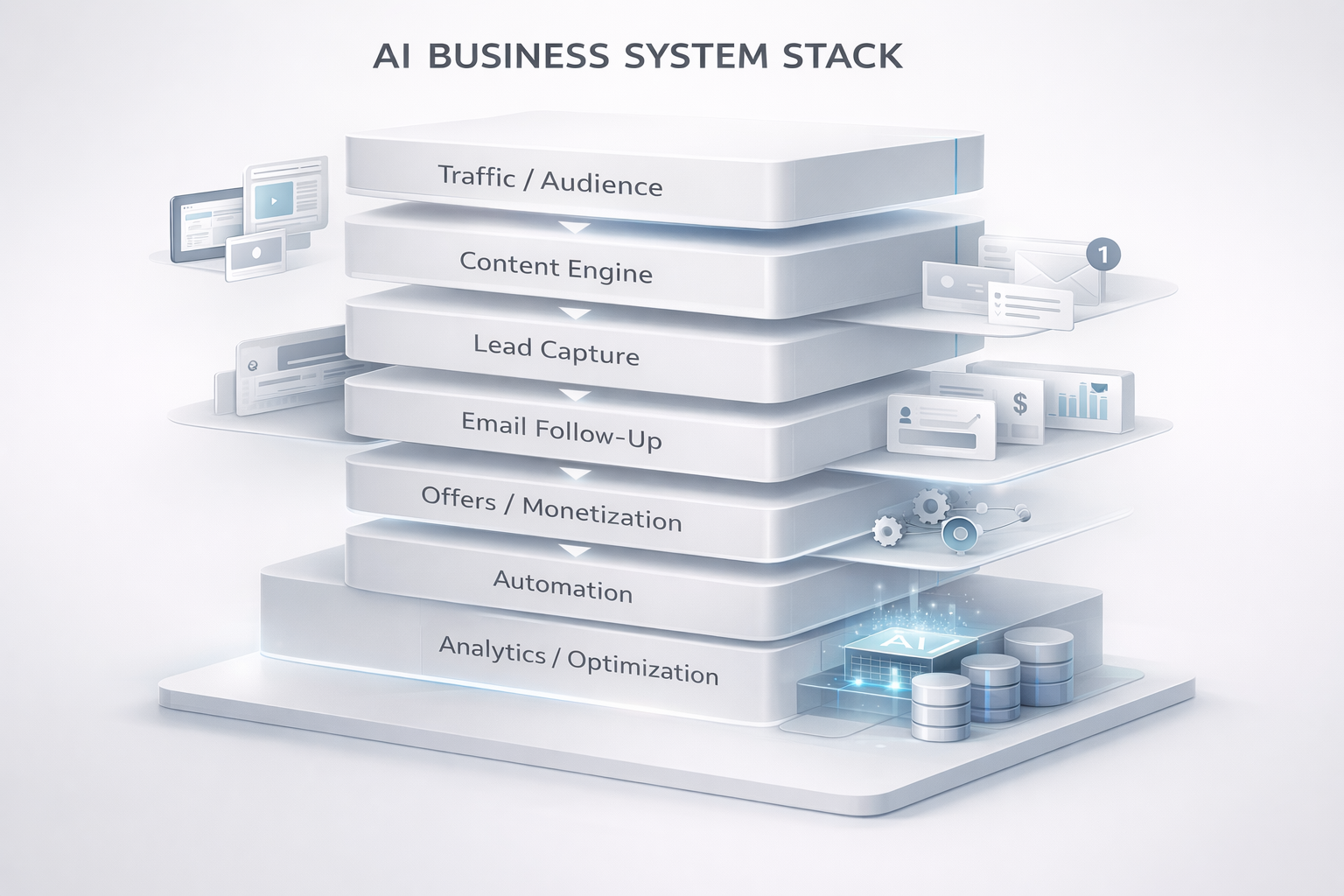
If you want to understand how these tools fit into a bigger AI business system, start with the full framework here:
AI for Online Business in 2026
The Problem: Too Many Tools, No Real System
There has never been a time with more AI tools available.
And yet:
- Most businesses are still stuck
- Most creators are still inconsistent
- Most funnels still don’t convert
Because the problem is not lack of tools.
It’s lack of structure.
The Mistake Everyone Makes (And Why It Costs You Time and Money)
Most people choose tools like this:
- “What’s trending?”
- “What’s new?”
- “What looks powerful?”
Instead of:
“What does my system actually need right now?”
Result:
- Tool overload
- Rising monthly costs
- No real improvement
- Constant switching
More tools
Same results
What Makes an AI Tool Actually Worth Using?
Not all tools that look powerful are useful.
A tool becomes valuable when it:
- Solves a specific bottleneck
- Reduces operational friction
- Improves consistency
- Fits into your existing workflow
- Integrates with the rest of your system
If a tool doesn’t improve how your system runs:
It’s not an asset
It’s noise
The Only Way to Choose AI Tools That Actually Work
There’s one rule that eliminates most bad decisions:
System first. Tools second.
If you don’t know:
- What your workflow is
- Where your bottleneck is
- What you’re trying to improve
Then:
Every tool will look useful
And most will be unnecessary
The Real AI Stack (How Tools Should Be Organized)
Instead of thinking:
“best tools overall”
You need to think:
tools by function inside a system
1. Content Creation & Ideation Tools
This is where most people start — and where most get stuck.
What actually works:
- Tools that generate structured content
- Tools aligned with SEO or audience intent
- Tools that support scalable production
What doesn’t:
- Generic text generators
- Tools with no strategic output
- Content without distribution
Content is only valuable if it leads somewhere
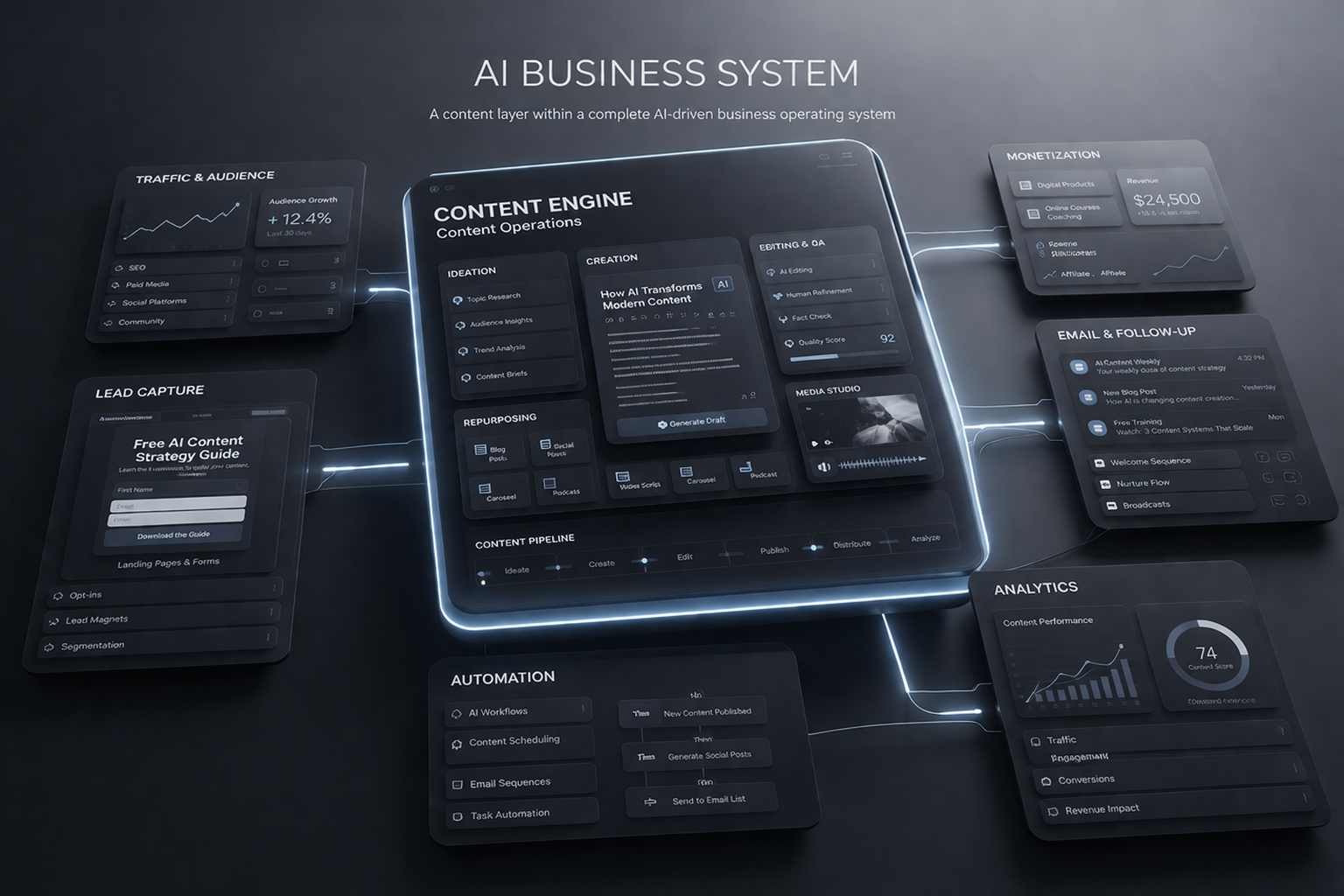
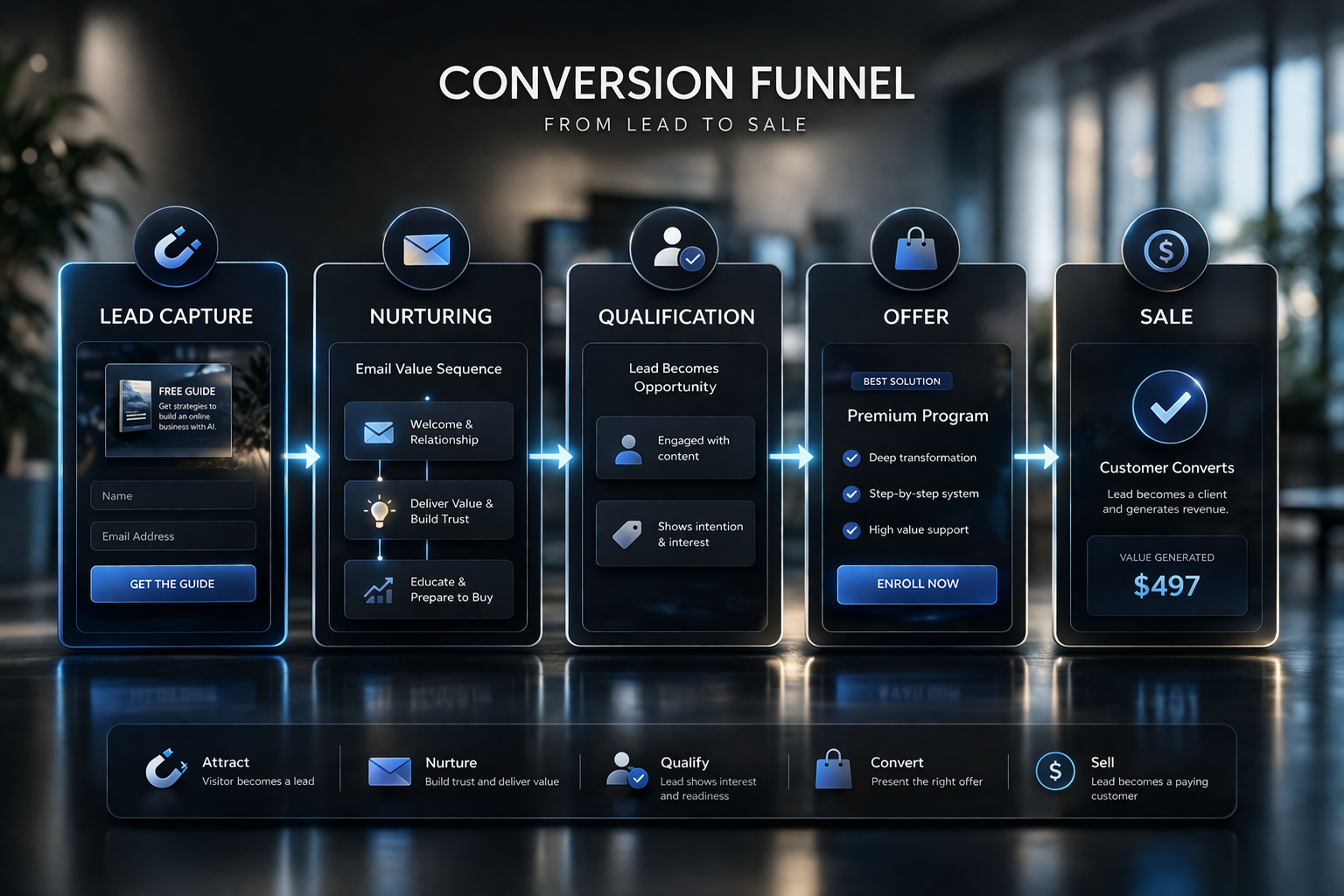
2. Funnel & Conversion Infrastructure
This is where businesses either generate revenue — or don’t.
What actually works:
- Lead capture systems
- Structured funnels
- Conversion-focused platforms
What doesn’t:
- One-page funnels
- No follow-up
- Disconnected tools
Traffic without conversion = wasted effort
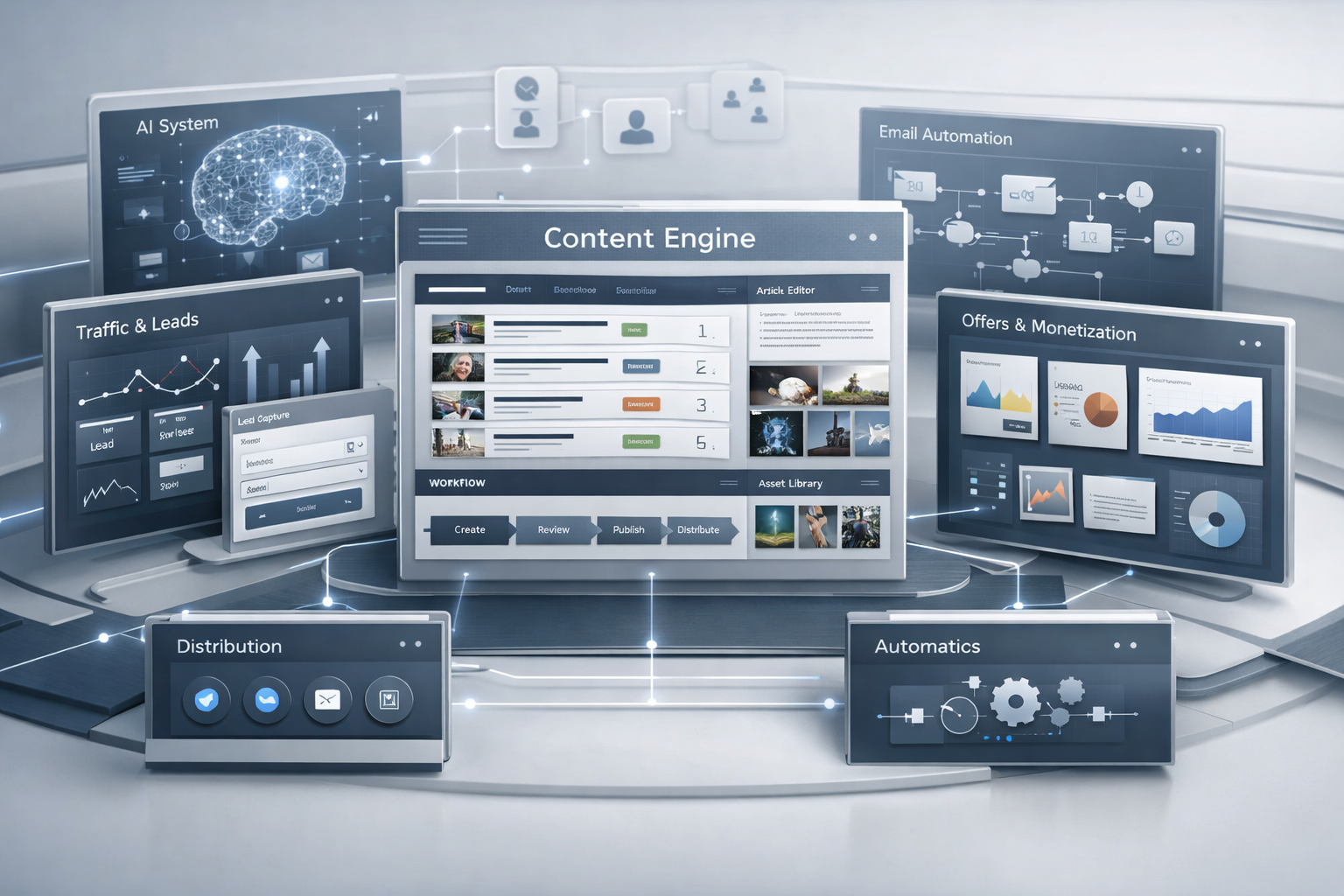
3. Automation & Workflow Systems
This is where scale becomes possible.
What actually works:
- Trigger-based automation
- Clear workflows
- Tool integration
What doesn’t:
- Over-automation
- Complex setups
- No visibility
Automation should simplify — not complicate
4. Communication & Follow-Up Tools
Most revenue is generated here — not on the first click.
What actually works:
- Email automation
- Message sequencing
- Lead nurturing systems
What doesn’t:
- One-touch communication
- Generic follow-ups
- No personalization
Follow-up is where conversion happens
5. Tracking & Optimization Layer
This is what separates guessing from scaling.
What actually works:
- Funnel tracking
- Conversion analytics
- Data-driven decisions
What doesn’t:
- Blind execution
- No tracking
- No iteration
If you don’t measure, you don’t scale
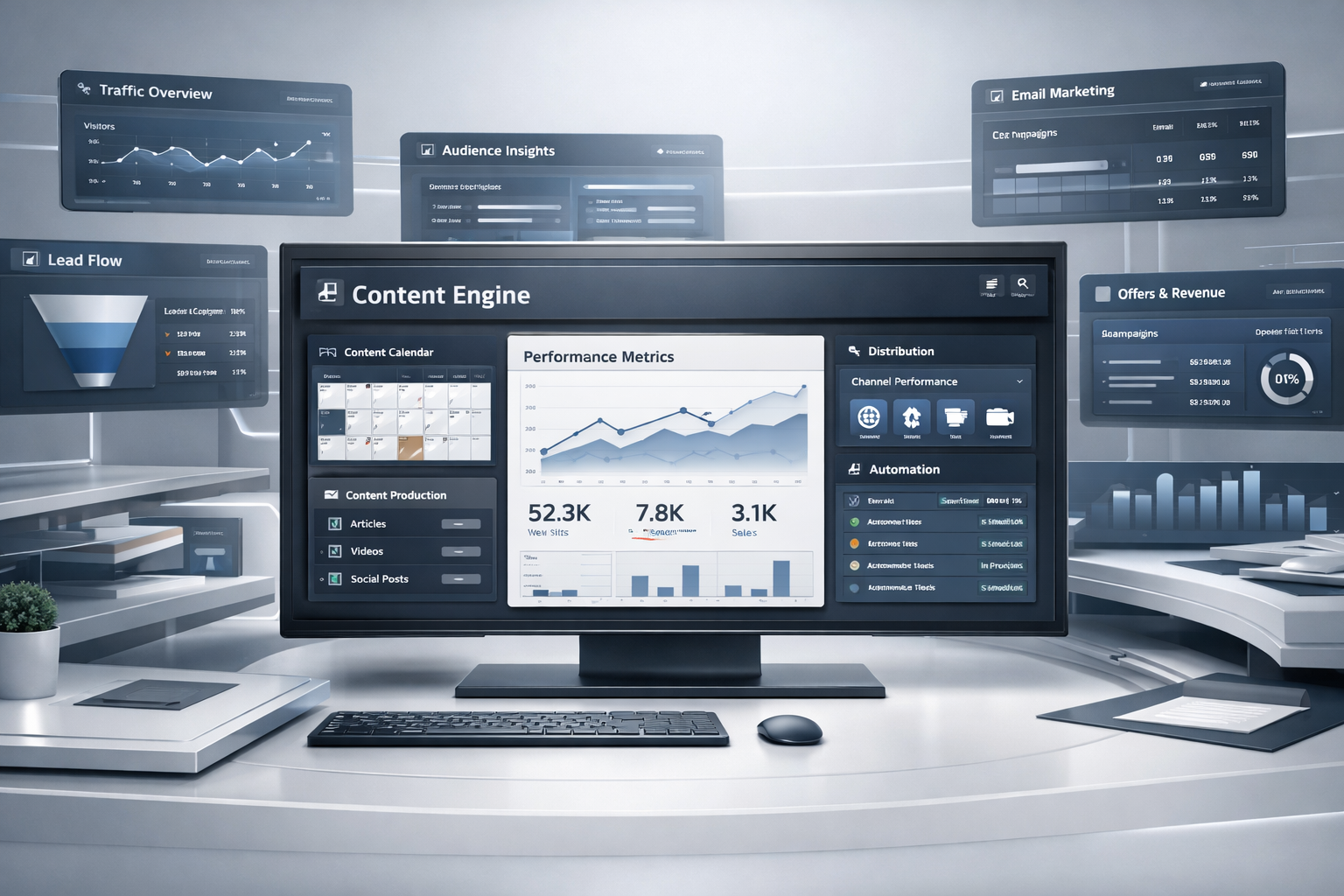
One tool that fits especially well here is Databox. It helps centralize performance visibility across your business, which makes it easier to spot what is actually working, what is underperforming, and where optimization should happen next. If you want to evaluate whether it’s a useful fit inside this layer, this Databox review breaks it down in more detail.
What’s Actually Worth It vs What’s Overhyped
✅ Worth It
- Tools that integrate into your workflow
- Tools that solve a real bottleneck
- Tools that reduce manual effort
- Tools that support scalability
❌ Overhyped
- “All-in-one” tools without depth
- AI tools that only generate content
- Platforms promising automation without structure
- Tools you don’t actually need yet
How to Choose AI Tools Without Getting Distracted
Ask these three questions:
1. Where is my bottleneck?
- Content
- Conversion
- Automation
2. What system do I already have?
- None → start simple
- Partial → optimize
- Advanced → scale
3. What will this tool replace?
If the answer is:
“nothing”
You probably don’t need it.
Strategic Connection (Why This Matters)
This is the decision layer of the entire system.
Without it:
You stay stuck testing tools
With it:
You build a real stack
If you want a complete breakdown of how to structure your AI stack for revenue:
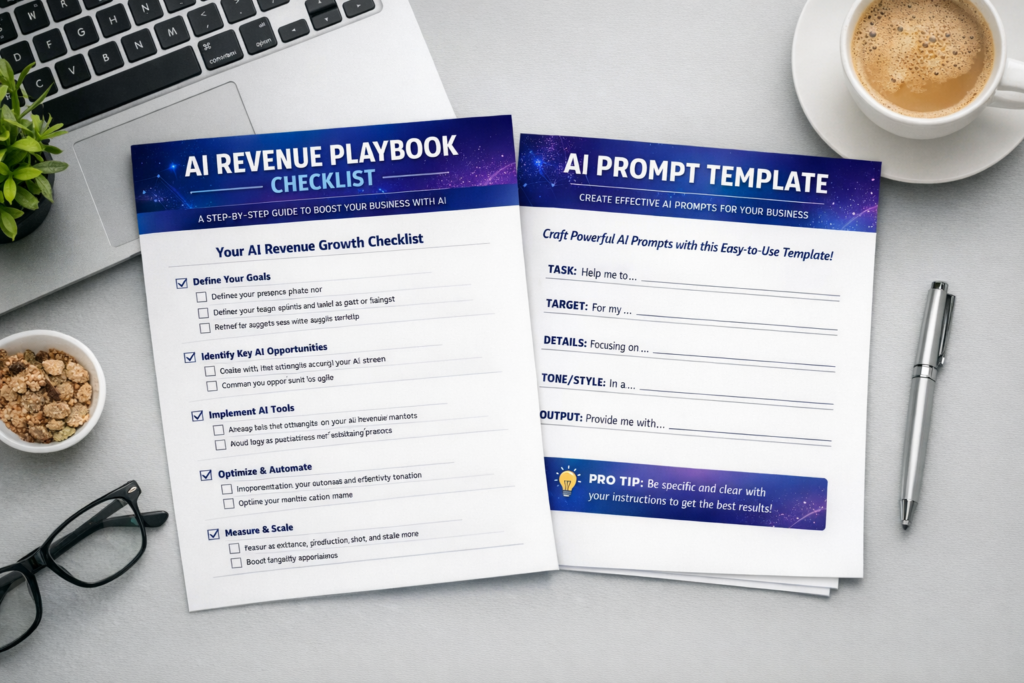
This shows how tools connect into a real system.
Summary
- The best AI tools depend on system fit — not features
- Tools should be chosen based on function within a workflow
- Most tools are unnecessary without a clear bottleneck
- Integration matters more than quantity
- Scalable businesses use fewer, better-connected tools
Conclusion
The real question is not:
“What are the best AI tools?”
It’s:
“What system am I building — and what tools support it?”
Because tools don’t create results.
Systems do.
And once the system is clear:
Choosing tools becomes simple
—and scaling becomes possible.
Related Tool Breakdowns
If you want to explore more AI tools by use case, these additional reviews may help:
- Zendrop — useful if your business model includes product fulfillment and ecommerce operations.
- Reddify AI — relevant if you’re exploring AI-assisted audience acquisition and content distribution.
- Simplified — worth reviewing if you need a broader creative workflow tool for content production and asset generation.
These are not “must-use” tools for every business — but they can make sense depending on the type of system you’re building.
About the Author
Lydia (Salles & Co. Digital) is a Strategic Affiliate focused on international digital products, AI tools, premium programs, and high-level business opportunities. She analyzes platforms, launches, and ecosystems from a practical, results-driven perspective before recommending them.