
AI in online business in 2026 is no longer about isolated tools or content generation. It works through integrated systems that connect content creation, distribution, automation, and conversion into a unified workflow.
Businesses that scale are not producing more content — they are operating structured systems that generate predictable results.

The Shift: From “Using AI” to Building Systems
Most people are still asking:
“What AI tool should I use?”
That’s already the wrong question.
In 2026, the advantage doesn’t come from the tool — it comes from how AI is structured inside your business.
What actually works in practice:
- AI embedded into repeatable workflows
- Systems that connect content → traffic → leads → sales
- Automation that reduces operational friction (not control)
What consistently fails:
- Random prompts with no strategic direction
- Tool stacking without integration
- Content production with no distribution or conversion path
The gap is no longer access to AI
The gap is system design and execution
The 5-Layer AI Business System (What Actually Scales)
To understand how AI generates real results, you need to see it as a system — not a tool.
Layer 1 — Content Creation Engine
This is where most people stop — and where most businesses stall.
AI can generate:
- Articles
- Posts
- Scripts
- Hooks
But content alone does not build a business.
What actually works:
- Content tied to a clear objective (traffic, authority, conversion)
- Structured production aligned with platform behavior
- Content designed to feed a larger system
What fails:
- Generic content
- Publishing without distribution logic
- Creating without knowing the next step
If your content doesn’t lead somewhere, it doesn’t scale.
Deep dive:
→ How AI Is Actually Used to Create and Distribute Content in Online Business
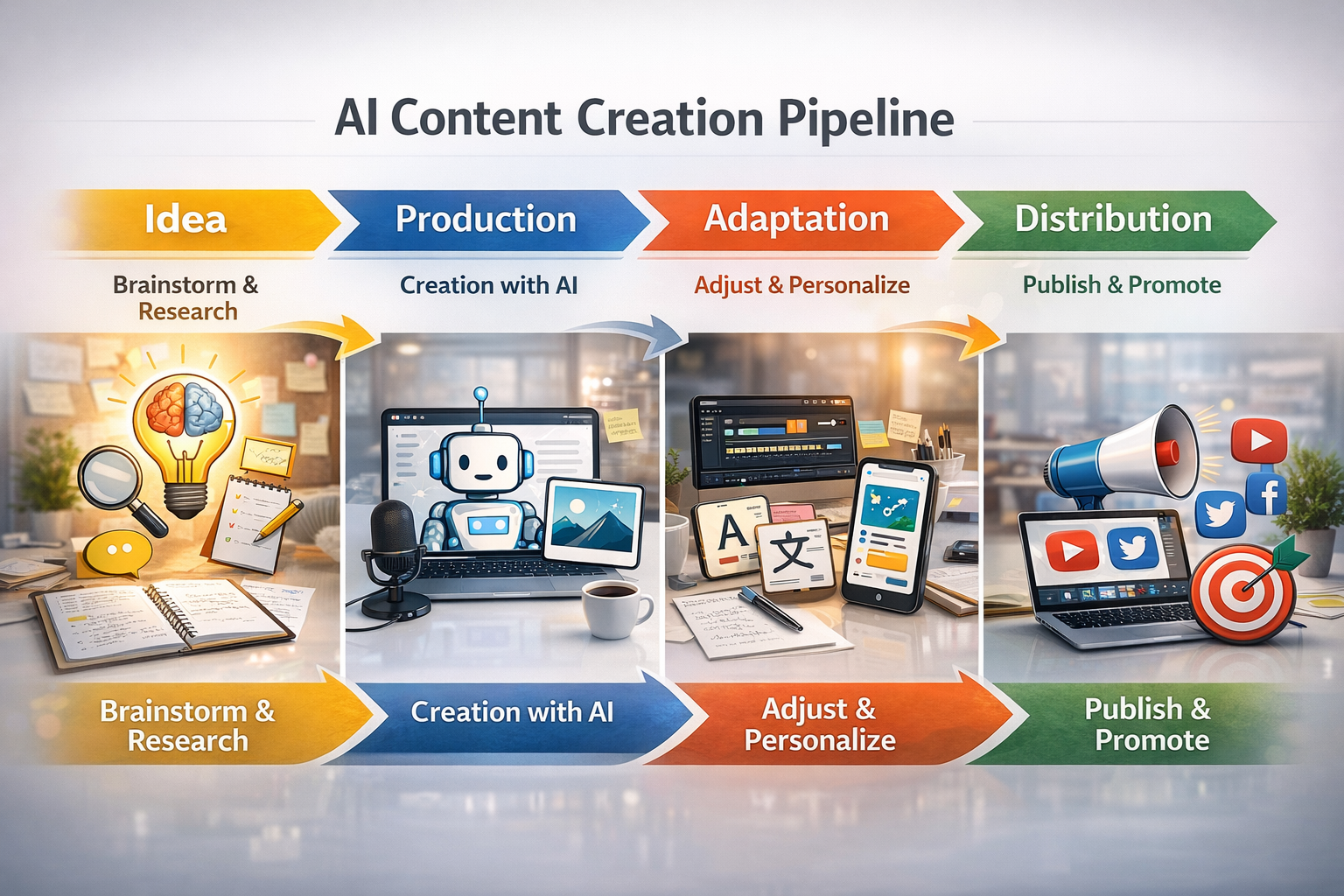
Layer 2 — Distribution & Consistency System
Content only works if it gets seen — consistently.
In 2026, AI handles:
- Scheduling
- Repurposing
- Multi-platform adaptation
But the real shift is this:
Consistency is no longer based on discipline.
It is based on system design.
What works:
- Content pipelines (not daily posting pressure)
- AI repurposing across channels
- Pre-defined distribution flows
What doesn’t:
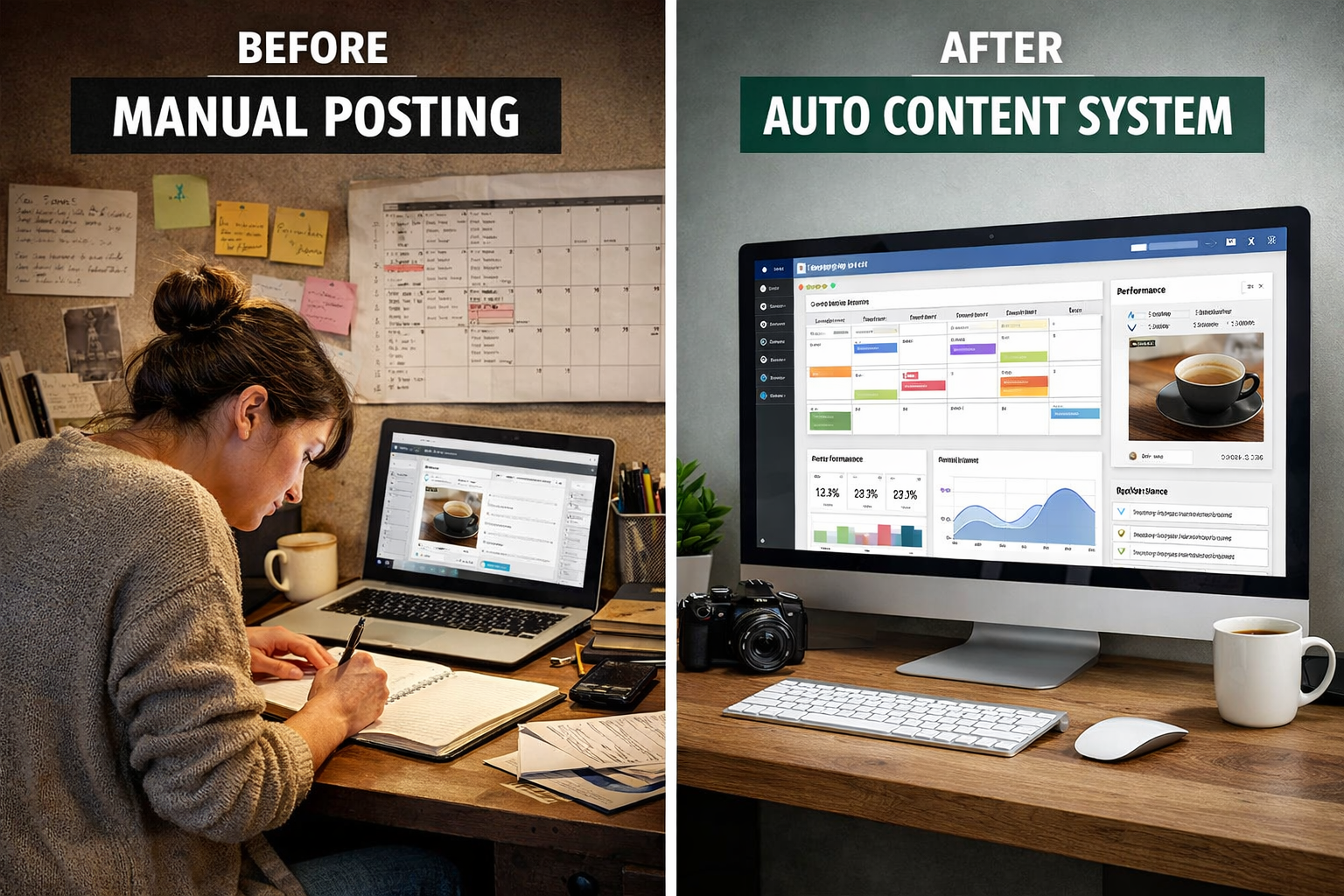
- Manual posting routines
- “Post every day” strategies
- Starting from zero every time
This is where most people burn out — and where systems remove friction.
If consistency is your bottleneck:
→ Stop Posting Every Day: The AI Content System That Grows Your Business
Layer 3 — Automation & Operations
This is where businesses either scale — or collapse.
AI can now handle:
- Repetitive tasks
- Internal workflows
- Customer interactions
- Data processing
But here’s the reality:
Automation doesn’t fix problems.
It accelerates them.
What works:
- Clear workflows before automation
- AI assisting decisions — not replacing them
- Controlled, visible systems
What fails:
- Automating broken processes
- Over-automation without structure
- Losing operational visibility
Good automation creates leverage.
Bad automation creates chaos — faster.
If your operation feels messy or overloaded:
→ Too Many Tasks? How AI Automates Your Online Business
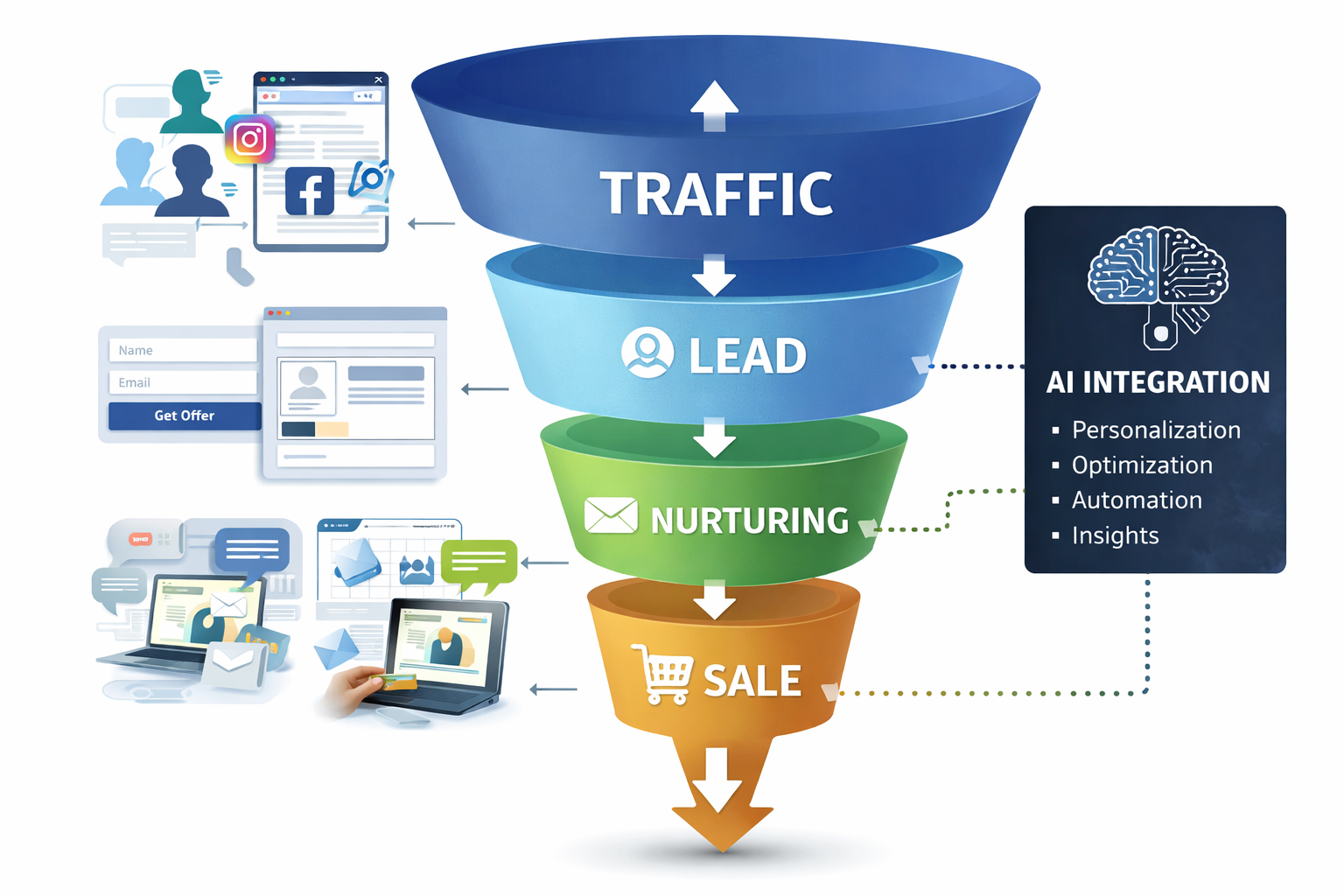
Layer 4 — Traffic → Conversion System (The Core of Revenue)
Traffic is not the goal.
Revenue is.
And this is where most businesses break.
They generate traffic — but have no system to convert it.
AI in 2026 enables:
- Smarter lead capture
- Personalized follow-ups
- Automated nurturing sequences
- Conversion-optimized flows
What works:
- Funnel-based thinking
- Lead systems (not just pages)
- Follow-up as part of the system
What fails:
- Sending traffic directly to offers
- Ignoring lead capture
- No nurturing process
This is the difference between:
- Random sales
- Predictable revenue
If you have traffic but no consistent sales:
→ How AI Turns Traffic Into Sales
Layer 5 — Tools & Stack (Where Most People Get Distracted)
This is where beginners start — and where advanced players simplify.
In 2026, the problem is not lack of tools.
It’s:
- Too many options
- No system to guide decisions
What works:
- Choosing tools based on system needs
- Prioritizing integration over features
- Keeping the stack simple and functional
What fails:
- Chasing new tools every week
- Building complex stacks with no logic
- Letting tools dictate strategy
Tools should support your system — not define it.
If you’re unsure what’s actually worth using:
→ Best AI Tools for Online Business in 2026
The Reality Most People Don’t Want to Hear
AI does not fix:
- Weak positioning
- Poor offers
- Lack of direction
It amplifies what already exists.
Before vs After (Real Difference)
Before systems:
- Random posting
- Manual overload
- Inconsistent results
- Traffic without revenue
After systems:
- Structured workflows
- Automated execution
- Consistent output
- Revenue-driven processes
Where Most Businesses Go Wrong (And Why They Stall)
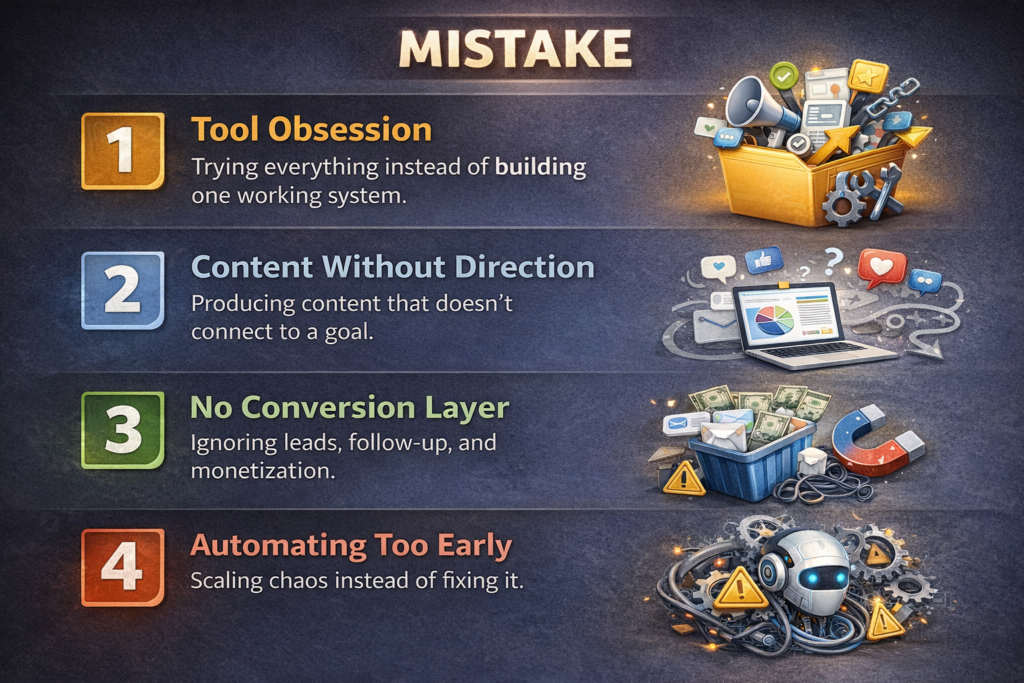
- Mistake 1 — Tool Obsession
- Trying everything instead of building one working system.
- Mistake 2 — Content Without Direction
- Producing content that doesn’t connect to a goal.
- Mistake 3 — No Conversion Layer
- Ignoring leads, follow-up, and monetization.
- Mistake 4 — Automating Too Early
- Scaling chaos instead of fixing it.
What Actually Generates Results
A simple rule:
AI only works when connected to a revenue system.
That means:
- Every piece of content has a role
- Every workflow has a purpose
- Every tool has a function
Strategic Integration (What to Do Next)
If you want to apply this:
- Map your current workflow
- Identify your bottleneck (content, traffic, conversion, operations)
- Fix one layer at a time
- Then apply AI
Not the opposite.
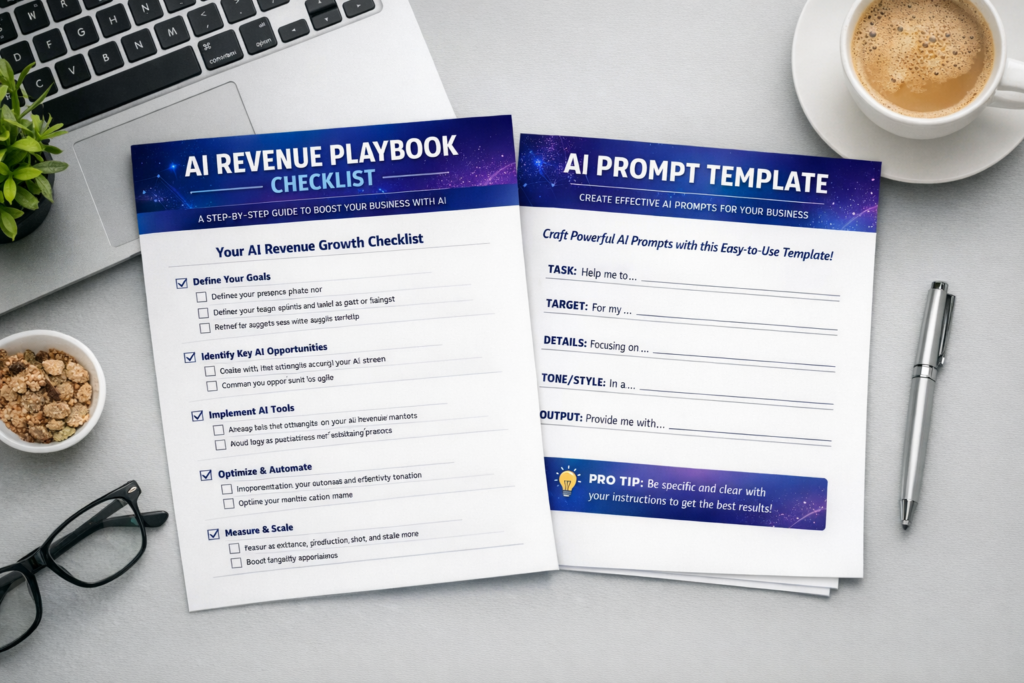
If you want to see how these systems actually work in a real business model, you can access the full breakdown below.
Quick Summary
- AI in 2026 works through systems, not isolated tools
- The core layers are: content, distribution, automation, conversion, and tools
- Most failures come from lack of integration
- Revenue comes from structured workflows, not content volume
- The real advantage is predictable, scalable processes
Conclusion
The conversation around AI is still focused on output.
More content.
More tools.
More automation.
But the businesses that are actually growing are doing something different:
They are building systems.
And once you understand that, everything changes.
About the Author
Lydia (Salles & Co. Digital) is a Strategic Affiliate focused on international digital products, AI tools, premium programs, and high-level business opportunities. She analyzes platforms, launches, and ecosystems from a practical, results-driven perspective before recommending them.