
AI content workflows in 2026 are structured systems that connect idea generation, content production, repurposing, and distribution into a repeatable pipeline. Instead of creating isolated posts, businesses use AI to build systems that continuously generate, adapt, and distribute content across platforms with minimal manual effort.
The Real Problem: Content Is Not the Bottleneck Anymore
Most people still think:
“I need AI to create more content.”
That’s outdated.
Content is no longer the hard part.
What actually matters now:
- Making content consistent
- Making it visible
- Making it lead somewhere
What changed:
Before:
Content creation was the main challenge
Now:
Structure and distribution define results
AI didn’t just speed up content creation
It exposed weak systems
This is just one layer of a larger system.
If you want to understand how content workflows connect with traffic, automation, and revenue as a complete structure:
→ Read the full AI Business System here
The AI Content Workflow That Actually Works (Step-by-Step)
In real businesses, content is not created randomly.
It follows a structured pipeline.
Step 1 — Idea Generation (Strategic, Not Random)
AI is used to generate:
- Content angles
- Hooks
- Topic clusters
But the difference is not volume — it’s direction.
What works:
Ideas tied to business goals:
- Traffic
- Authority
- Leads
What fails:
Endless random ideas with no strategic intent
Practical Example
Wrong:
“Give me 50 content ideas about marketing”
Correct:
“Generate content ideas that attract beginners interested in AI monetization”
The specificity defines the outcome

Step 2 — Content Production (Systemized Output)
AI can generate:
- Articles
- Posts
- Scripts
- Emails
But high-performing workflows are not just output.
They include:
- Structure (hook → value → transition → CTA)
- Platform adaptation
- Consistent positioning
What works:
- Using frameworks and templates
- Training AI with your tone and positioning
What doesn’t:
- Copy-paste generic outputs
- Publishing without editing
Step 3 — Content Repurposing Engine
This is where most people lose leverage.
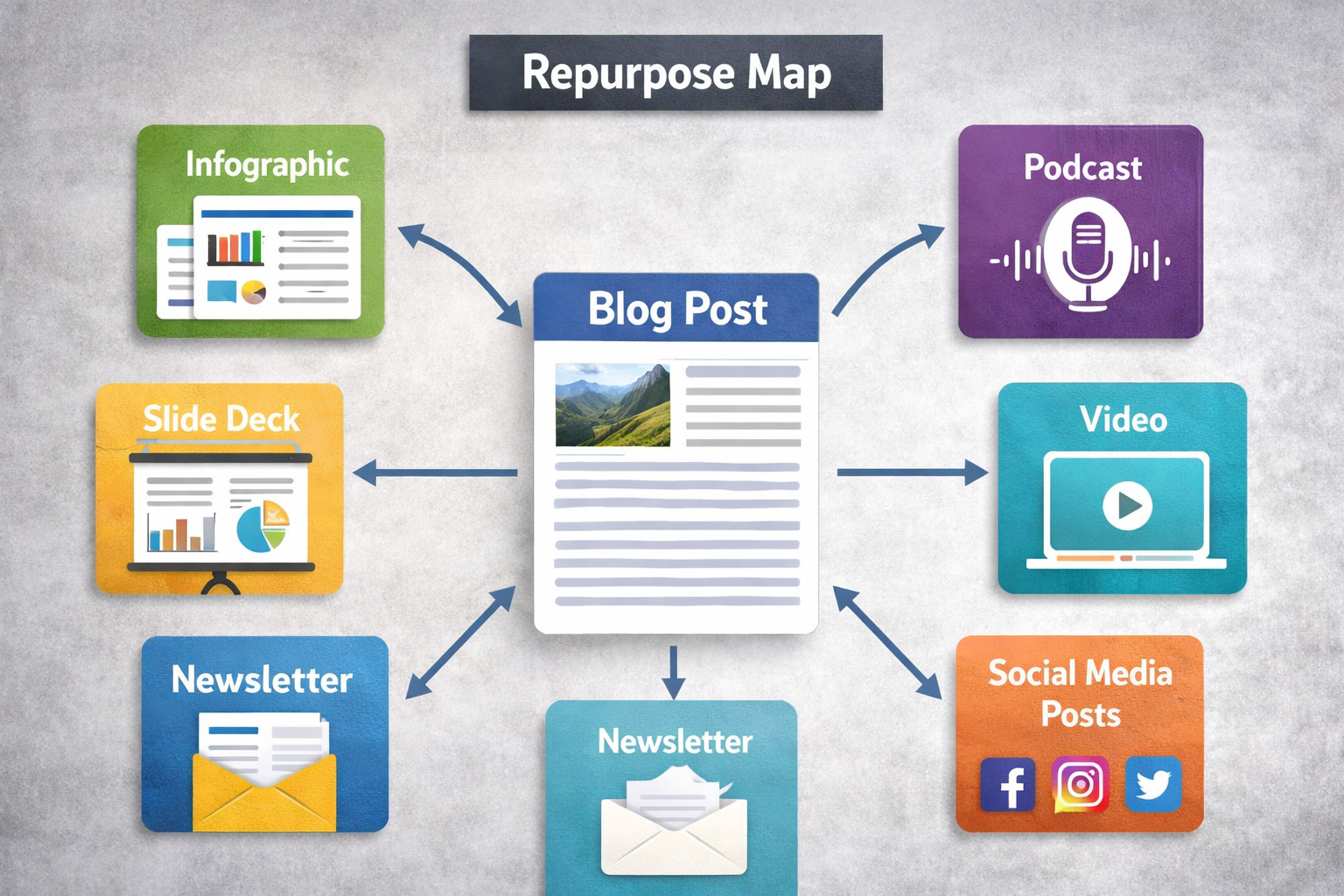
One piece of content should generate multiple assets.
Example workflow:
1 long-form article becomes:
- 5–10 short posts
- Threads
- Captions
- Short-form scripts
- Email content
Same idea → multiple distribution points
Step 4 — Distribution System (The Real Growth Lever)
This is where AI creates real impact.
AI handles:
- Scheduling
- Formatting
- Consistency
But the real shift is this:
You stop depending on motivation
What works:
- Pre-scheduled pipelines
- Weekly or monthly batching
What doesn’t:
- Posting manually every day
- Relying on inspiration
For businesses trying to make content publishing more consistent, tools focused on planning and scheduling can help reduce manual effort. Syllaby is one example in that category.
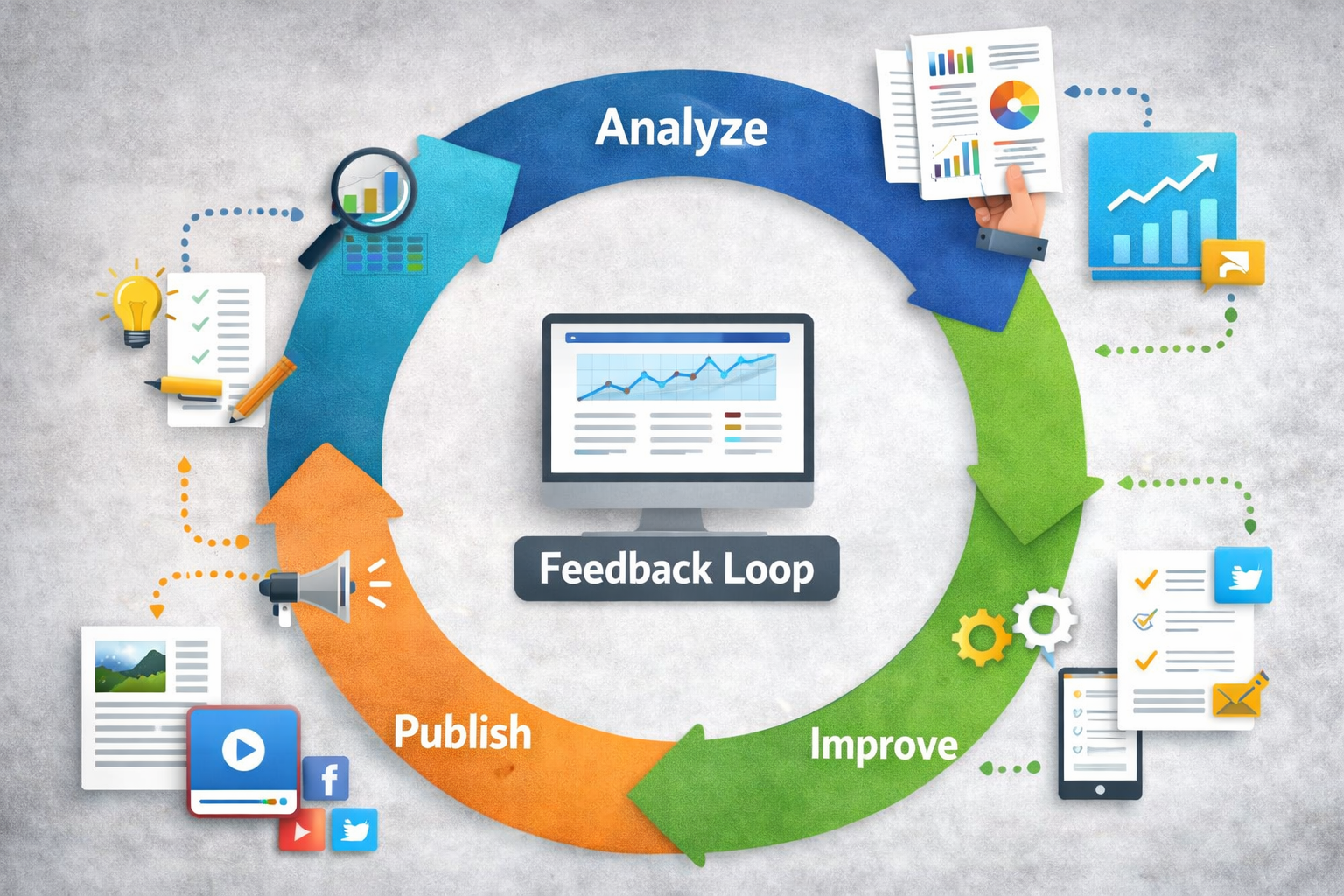
Step 5 — Feedback Loop (Optimization Layer)
Most people skip this — and that’s why they plateau.
AI can analyze:
- Engagement
- Clicks
- Conversions
And improve:
- Hooks
- Formats
- Content angles
This is what creates compounding results over time
What Actually Works vs What Looks Good on Paper
✔ What works:
- Content connected to a system
- Repurposing at scale
- Distribution automation
- Feedback-driven optimization
❌ What doesn’t:
- “Viral content hacks”
- Posting more without structure
- Using AI without clear intent
- Ignoring distribution
The Biggest Mistakes (And Their Consequences)
Mistake 1 — Treating AI as a Writer Only
→ More content, same results
Mistake 2 — No Distribution System
→ Great content nobody sees
Mistake 3 — No Repurposing
→ Wasted effort, low leverage
Mistake 4 — Inconsistent Execution
→ No compounding growth
Before vs After: Real Operational Difference
Before AI Workflow:
- Manual creation
- No system
- Inconsistent posting
- Low output
After AI Workflow:
- Pipeline-based creation
- Automated distribution
- Repurposed content
- Predictable consistency
How to Implement This Without Breaking Your Workflow
Phase 1 — Define Your Goal
- Traffic
- Authority
- Leads
Phase 2 — Build One Simple Pipeline
Start with:
- Idea generation
- Content creation
- Basic distribution
Phase 3 — Add Repurposing
From:
1 → 3 pieces
Then:
1 → 5 pieces
Phase 4 — Add Automation
Only after the system works.
If you want to see how this content workflow connects directly to revenue (not just content output):
Claim your free AI Revenue Playbook here
This breaks down how content, automation, and funnels connect into a single system.
Summary
- AI content workflows are pipelines, not isolated tasks
- The key stages are: ideation, creation, repurposing, distribution, and optimization
- Most businesses fail due to lack of structure—not lack of content
- Repurposing and distribution create leverage
- Consistency is system-driven, not effort-driven
Conclusion
AI didn’t make content easier.
It made bad systems more obvious.
The people winning in 2026 are not creating more.
They are:
- Structuring better
- Distributing smarter
- Leveraging every piece of content
And most importantly:
They are building workflows that run
—even when they don’t.
Related Reviews
If you want to explore tools connected to content production and scalable workflows, these reviews may help:
- Creaitor.ai — for structured AI-assisted content production
- ContentBlocks — for modular content repurposing systems
About the Author
Lydia (Salles & Co. Digital) is a Strategic Affiliate focused on international digital products, AI tools, premium programs, and high-level business opportunities. She analyzes platforms, launches, and ecosystems from a practical, results-driven perspective before recommending them.